Every hiring manager knows the frustration: a resume full of glowing claims, a certificate from a well-known name, and then — a candidate who can't actually do the job. Traditional hiring has always leaned heavily on self-declared skills and paper credentials, leaving companies to discover the gap only after onboarding.
Become A Skiller was built to close that gap. Through the platform's Company Module, businesses don't just see who says they're skilled — they see who has actually done the work. Here's what that actually looks like on the platform, and why it changes the kind of information a company has access to before making a hiring decision.
Access That Comes With Every Course Purchase
Companies register on Become A Skiller and purchase the specific courses or skills relevant to their recruitment, skill evaluation, employee development, and workforce upskilling needs. What's worth understanding is what that purchase actually unlocks: it isn't just a course description. It gives the company access to candidates with Verified Practical Experience in that skill, detailed skill information, certification insights, a preview of the certification test itself, course-related interview questions, and the tools to build custom interview tests — all tied to that one purchased skill.
Why "Verified Practical Experience" Is a Different Kind of Signal
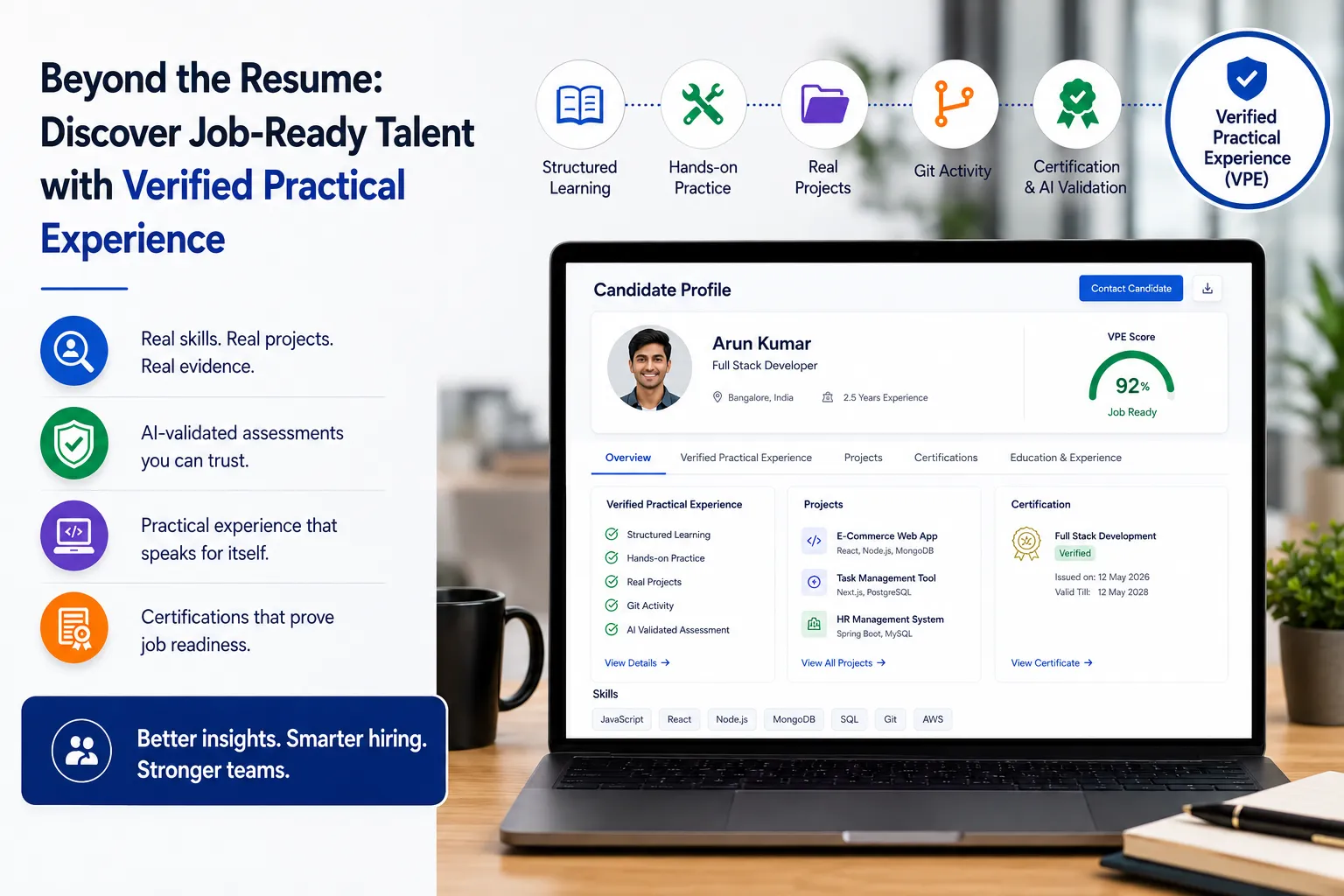
This is the core idea behind the entire platform, and it's worth understanding properly. Become A Skiller doesn't consider a learner "skilled" simply because they finished a course or received a certificate. Real capability, in this model, is treated as something that has to be demonstrated, not just declared — and that demonstration comes from several different kinds of evidence working together:
- Structured learning that builds conceptual understanding, not just exposure to material.
- Hands-on practice and real assignments that test whether concepts can actually be applied.
- Complete practical projects and chapter-wise self-evaluation, showing sustained ability rather than a single good moment.
- Git repository activity, reflecting how the candidate manages and maintains real work.
- A certification test backed by AI-based validation and feedback.
Each of these on its own is useful information. Together, they form what Become A Skiller calls Verified Practical Experience (VPE) — a fuller, evidence-backed picture of applied capability that a certificate or resume line simply can't capture by itself.
What a Company Actually Sees in a Candidate's Profile
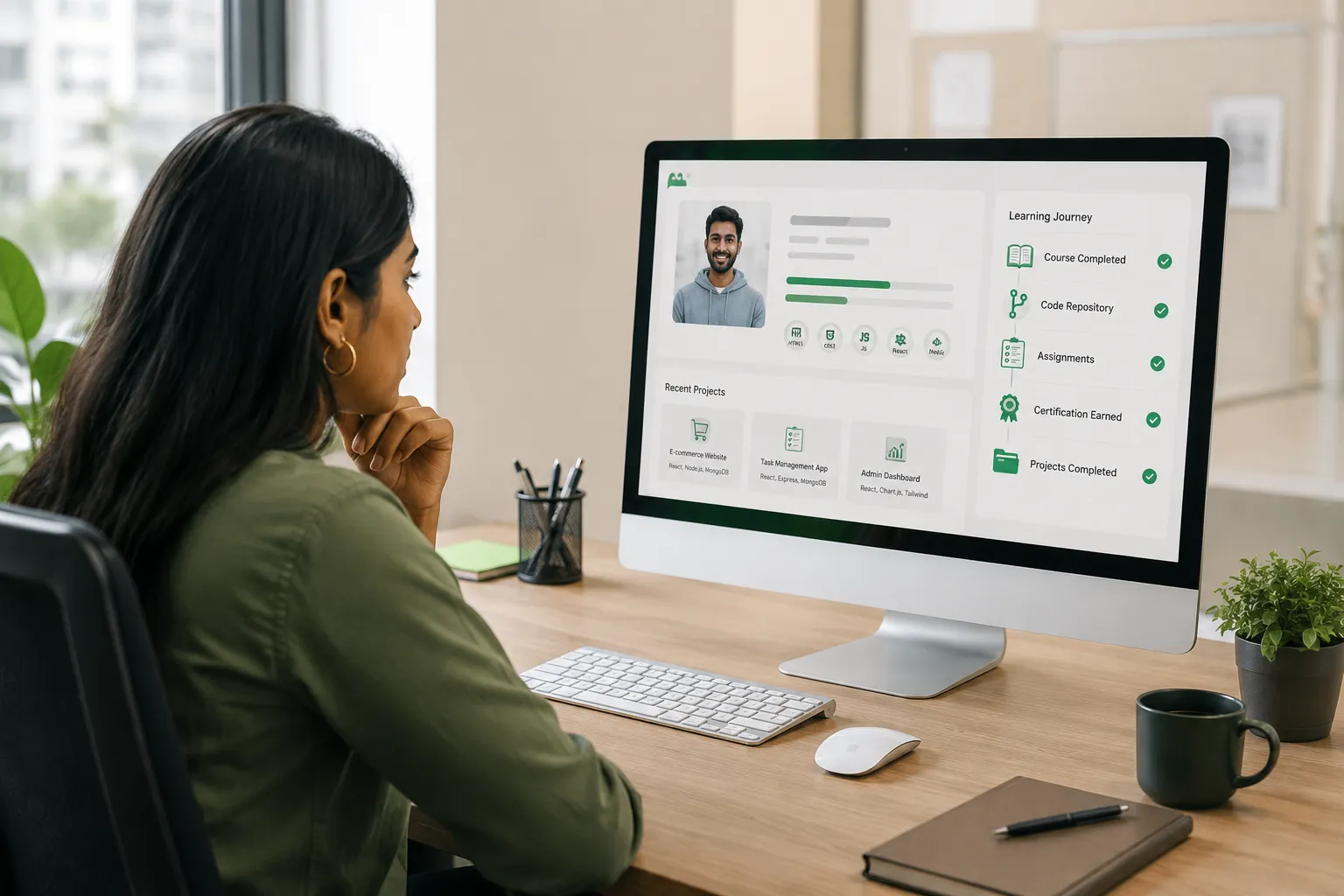
For any user tied to a purchased skill, companies can open a full profile — educational background, professional experience where applicable, VPE, project history, certification details, and, where the platform permits, contact information. The value here isn't just that the information exists; it's that it's organized around demonstrated capability rather than self-reported claims.
That distinction matters more than it might seem. A company reviewing a profile isn't just reading what a candidate says about themselves — it's looking at project work, assessment results, and applied performance that the candidate didn't write themselves.
Understanding What a Certification Actually Measures
Certifications are only as meaningful as what they test — and one of the more overlooked features on Become A Skiller is that companies aren't asked to simply trust a certification at face value. A preview of the certification test tied to any purchased course is available, showing the competency areas, practical understanding, and knowledge domains the assessment actually covers. That visibility turns a certification from a badge into something a company can genuinely evaluate.
The Options Available Once a Candidate Looks Right
When a company finds a profile, VPE record, and certification history it's satisfied with, it isn't locked into a single next move. It can proceed directly to onboarding, treating the demonstrated evidence as sufficient. Or, if it wants an additional layer of confidence, it can schedule an interview test before deciding. Either way, the decision — and the criteria behind it — stays entirely with the company.
Why This Model Is Harder to Fake
A quieter but genuinely valuable benefit of this approach is how much harder it is to misrepresent. Inflated resumes and unverifiable claims are a well-known problem in traditional recruitment. When evaluation is instead built on a candidate's actual learning journey — projects, Git activity, chapter evaluations, and certification performance — there's simply far less room for exaggeration to hide in.
A Credential That Means Something for Candidates Without a Traditional Track Record
This matters most for freshers and candidates without conventional employment history — a group traditional hiring often struggles to evaluate fairly. A VPE-backed certification isn't meant to replace an employer-issued experience letter, but it functions as an experience-equivalent credential: tangible evidence that a candidate can apply what they've learned, not just recite it.
Taken together, this is what the Company Module offers: a way to see who can actually do the job, backed by evidence rather than assumption, well before a company ever schedules its first interview.