
Not every hiring need is solved by browsing certified candidates one profile at a time. Sometimes a company simply needs to put a role in front of as many qualified people as possible and see who responds. That's the purpose job posting serves inside the Become A Skiller Company Module — and it's designed to work alongside Verified Practical Experience (VPE) discovery, not replace it.
What makes this part of the platform worth understanding isn't just that a company can publish a job — it's how differently applicants are represented once they respond, and why that difference actually helps a hiring team make better decisions.
What Publishing a Job Actually Puts in Front of Candidates
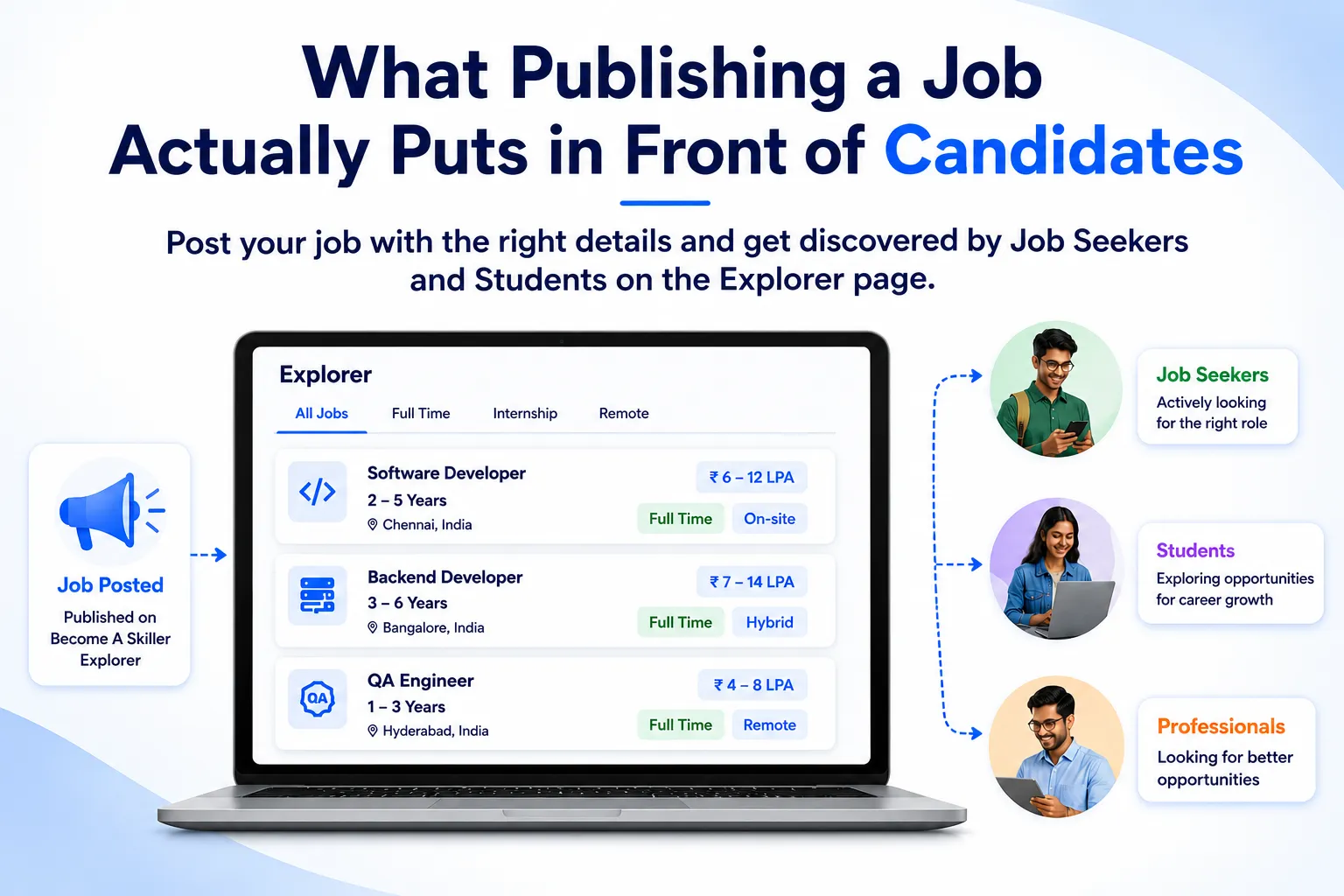
A job post on Become A Skiller is built around the details that actually shape whether a candidate applies: Job Title, Required Experience (from and to), CTC, Number of Openings, Job Post Expiration Date and Time, Work Location, and a full Job Description.
Once published, the post appears on the platform's Explorer page, where Job Seekers and Students can browse open roles and apply to the ones that fit their skills, qualifications, and experience. This is what gives companies access to a wider pool of applicants — beyond the candidates they'd find by searching VPE profiles directly.
Why Applicant Profiles Aren't One-Size-Fits-All
Here's something worth understanding about how applications actually appear to a company: Become A Skiller doesn't flatten every applicant into the same profile format. What a company sees depends on who's applying, because different candidates have different kinds of evidence to offer.
A fresher's profile centers on name, contact details, gender, a profile description, educational details — course, institution, percentage, and year of passing — skill set, and resume, along with Verified Practical Experience and certification details where applicable. It's built for someone whose strongest evidence is what they've learned and practiced, not where they've worked.
An experienced candidate's profile carries the same basic and educational details, but adds current company name, current designation, current CTC, and experience period — again alongside VPE and certification where applicable. This lets a company weigh employment history and demonstrated practical capability side by side, rather than choosing between them.
A BAS Certified Associate's profile goes further still: basic profile details, educational details, skill set, resume, full certification details, relevant course/skill information, and Verified Practical Experience — presented as the primary evidence of capability, not a supporting detail.
Why This Distinction Actually Matters
For freshers without conventional work history, VPE fills exactly the gap that usually makes early-career hiring so uncertain — it offers concrete evidence of practical exposure and applied ability where a resume alone would fall short. For experienced candidates, VPE isn't a replacement for their employment history; it's an independent, verified data point sitting alongside it, useful precisely because it wasn't self-reported.
In both cases, the underlying idea is the same: a company shouldn't have to guess whether a claimed skill holds up. The profile format is built to surface the kind of evidence that actually answers that question, for whichever type of candidate is applying.
Seeing Every Applicant Through the Same Lens
As applications arrive, they're organized in a single dashboard, with the level of detail shown automatically adjusted based on candidate type:
- Freshers — profile, educational details, skills, and VPE where applicable.
- Experienced candidates — profile, professional experience, skills, and VPE where applicable.
- Certified candidates — profile, professional/educational details, VPE, and certification information.
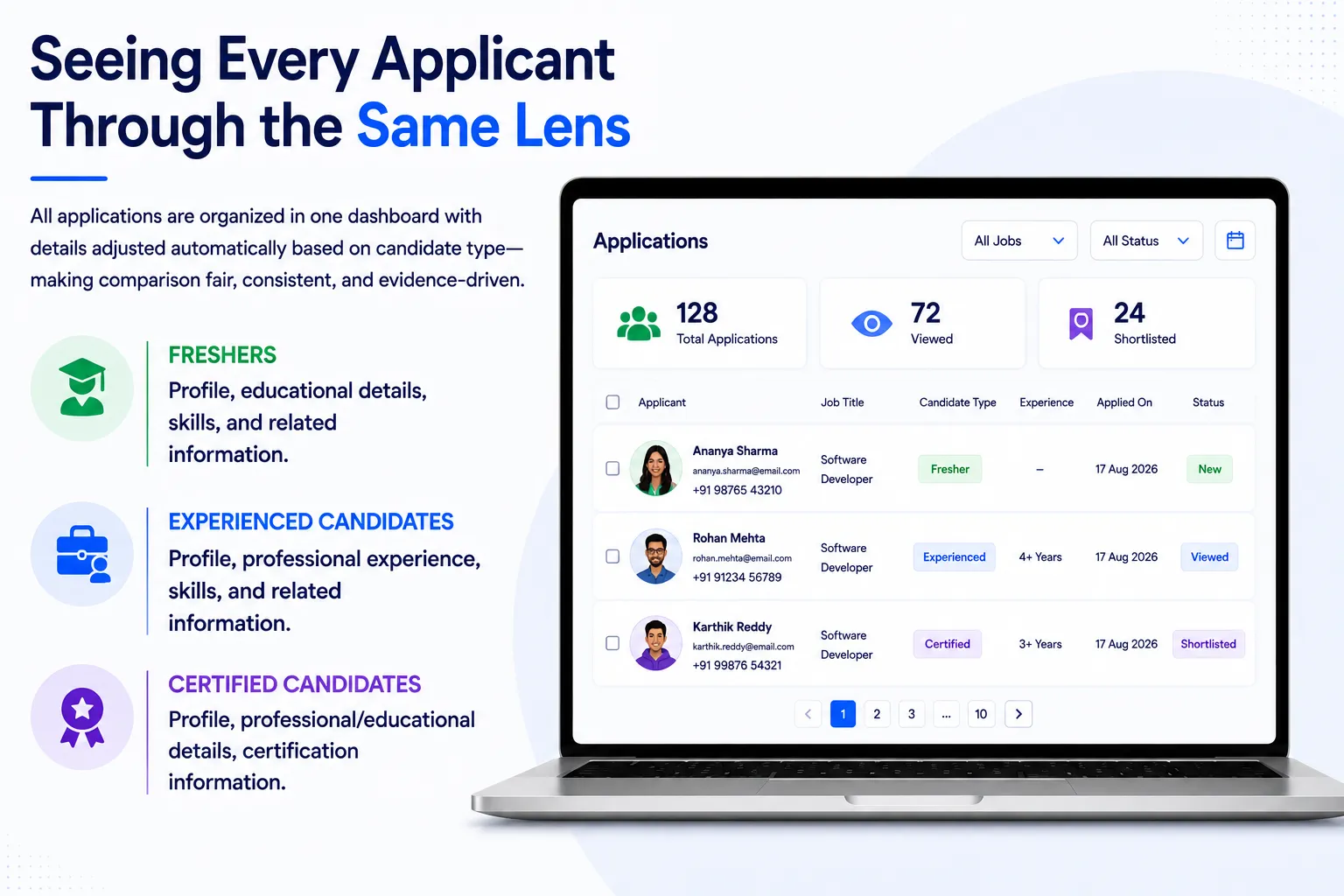
What this really solves is comparability. Without a consistent structure, comparing a fresher's potential against an experienced hire's track record is genuinely difficult. With VPE represented across every profile type, a company can weigh conventional professional experience and demonstrated practical capability on comparable terms — and move forward with candidates who fit both the role and the evidence in front of them.
Whether the next hire turns out to be a fresher just starting out, an experienced professional making a switch, or a BAS Certified Associate, the comparison stays fair, consistent, and grounded in real evidence rather than how well someone writes a resume.